
Networking
How to Clean and Maintain a Fiber Fusion Splicer
Jun
A fiber fusion splicer is a significant investment for any fiber optic technician, ISP contractor, telecom engineer, CCTV installer, or network maintenance team. Like any precision equipment, a fusion splicer requires regular cleaning and maintenance to maintain optimal performance. Proper maintenance helps reduce splice loss, extend equipment lifespan, minimize downtime, and improve the consistency of fiber optic installations.
Many common splicing problems can be traced back to poor maintenance rather than equipment failure. Dust, contamination, worn electrodes, dirty V-grooves, neglected cleavers, and improper storage can all negatively affect splice quality. By following a structured maintenance routine, technicians can keep their equipment operating reliably for years.
This guide follows our previous article on Fusion Splicer Battery Maintenance Guide. You can also browse our complete collection of Fiber Optic Splicing Machines.
Why Fusion Splicer Maintenance Is Important
Fusion splicers are precision instruments designed to align and fuse optical fibers with extremely high accuracy. Even small amounts of contamination can affect performance and increase splice loss.
Regular maintenance helps:
- Improve splice consistency
- Reduce splice loss
- Prevent equipment failures
- Extend equipment lifespan
- Improve technician productivity
- Reduce project downtime
Technicians who maintain their equipment properly generally experience fewer splice failures and better overall network performance.
Recommended Fusion Splicer Maintenance Schedule
| Maintenance Task | Frequency | Purpose |
|---|---|---|
| Clean Fiber Holders | Daily | Remove dust and debris |
| Clean V-Grooves | Daily | Improve fiber alignment |
| Inspect Electrodes | Weekly | Maintain arc stability |
| Perform Arc Calibration | Weekly | Optimize fusion performance |
| Inspect Cleaver | Weekly | Maintain cleave quality |
| Check Battery Condition | Monthly | Ensure reliable field operation |
| Full Equipment Inspection | Quarterly | Identify wear and damage |
Cleaning the V-Grooves
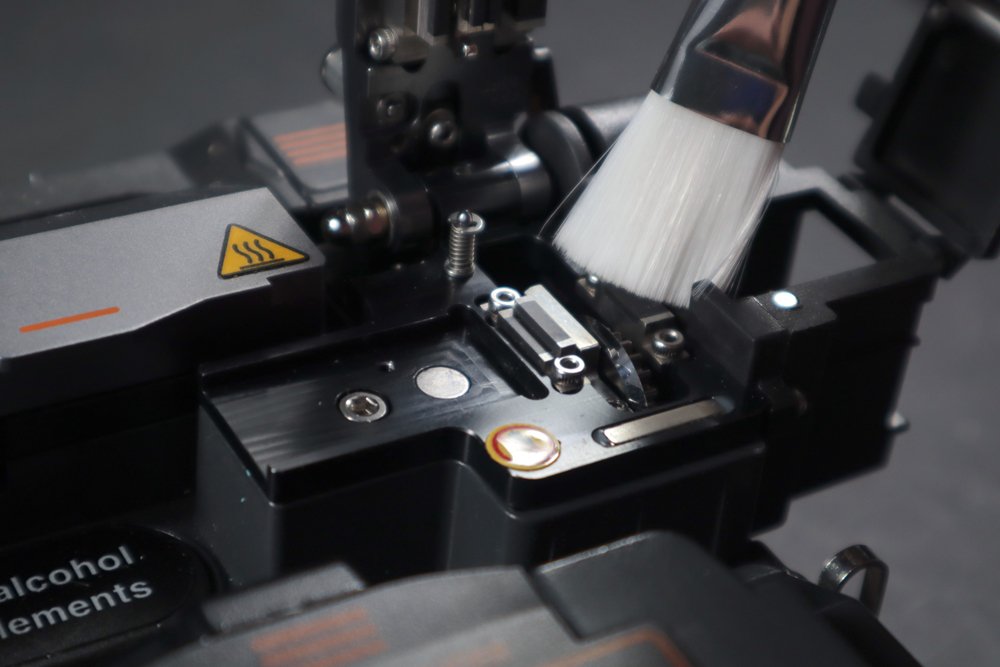
V-grooves are responsible for positioning fibers accurately during alignment. Dust, fiber fragments, and contamination can accumulate inside the grooves and interfere with proper alignment.
Dirty V-grooves often result in:
- Poor alignment
- Higher splice loss
- Failed splices
- Inconsistent results
To clean V-grooves:
- Power off the fusion splicer
- Use a clean brush or approved cleaning tool
- Remove dust and fiber debris
- Avoid damaging groove surfaces
- Inspect visually before use
Cleaning Fiber Holders and Clamps
Fiber holders and clamps are frequently exposed to stripped fiber coatings, dust, and environmental contaminants. Keeping these components clean improves fiber positioning and alignment accuracy.
Regular cleaning helps:
- Improve fiber stability
- Reduce alignment errors
- Improve splice consistency
- Reduce contamination risks
Maintaining Fusion Splicer Electrodes
Electrodes generate the electric arc used during fusion splicing. Over time, electrodes wear out and require replacement.
Warning signs include:
- Increasing splice loss
- Frequent arc errors
- Calibration failures
- Visible electrode wear
Technicians using Signal Fire equipment can maintain performance using genuine Signal Fire Replacement Electrodes.
For more information, review our article on When Should Fusion Splicer Electrodes Be Replaced?.
Performing Arc Calibration
Arc calibration adjusts the fusion splicer to compensate for environmental changes and electrode wear. This process helps maintain stable fusion performance.
Calibration should be performed:
- After electrode replacement
- After transportation
- After major temperature changes
- When splice quality declines
- As part of routine maintenance
Inspecting and Maintaining the Fiber Cleaver
A fusion splicer is only as good as the fiber preparation process. The cleaver must produce clean, accurate cuts for proper fusion performance.
Technicians should regularly inspect:
- Blade condition
- Fiber holders
- Cutting surfaces
- Debris accumulation
A properly maintained FC-6S High Precision Fiber Cleaver helps maintain low splice loss and improves consistency.
Keeping the Display and Cameras Clean
Most modern fusion splicers use cameras and image processing systems to align fibers. Dirty lenses or display surfaces can make it difficult to inspect fibers accurately.
Best practices include:
- Use approved cleaning materials
- Avoid abrasive products
- Clean gently
- Inspect regularly
Clear optics improve technician visibility and help identify potential issues before fusion begins.
Battery Maintenance
Battery performance directly affects field productivity. A poorly maintained battery can cause interruptions during installations and maintenance projects.
Good battery practices include:
- Use approved chargers
- Avoid deep discharge where possible
- Store properly
- Inspect regularly
- Carry spares when necessary
Technicians can maintain reliable field operation using genuine Signal Fire Replacement Batteries.
Proper Equipment Storage
Storage conditions affect long-term equipment reliability. When not in use, fusion splicers should be stored inside their protective carrying cases in a clean, dry environment.
Avoid:
- Direct sunlight
- Excessive heat
- Moisture exposure
- Dust accumulation
- Physical impacts
Field Maintenance Checklist
| Checklist Item | Status Before Deployment |
|---|---|
| Battery Charged | ✓ |
| Electrodes Inspected | ✓ |
| V-Grooves Cleaned | ✓ |
| Fiber Holders Cleaned | ✓ |
| Arc Calibration Completed | ✓ |
| Cleaver Inspected | ✓ |
| Accessories Packed | ✓ |
Common Maintenance Mistakes
Ignoring Routine Cleaning
Many technicians only clean equipment after performance issues appear. Preventive cleaning is far more effective than reactive maintenance.
Delaying Electrode Replacement
Using worn electrodes for too long can increase splice loss and reduce productivity.
Neglecting Cleaver Maintenance
Poor cleaving is one of the leading causes of splice loss and should never be overlooked.
Improper Storage
Leaving fusion splicers exposed to dust, moisture, or temperature extremes can shorten equipment lifespan.
Recommended Equipment for Reliable Maintenance
For technicians maintaining professional fusion splicing equipment, we recommend:
- Signal Fire AI-9 Fiber Fusion Splicer
- FC-6S High Precision Fiber Cleaver
- Replacement Electrodes
- Replacement Batteries
Frequently Asked Questions
How often should a fusion splicer be cleaned?
Basic cleaning should be performed daily, especially when working in dusty or outdoor environments.
What parts require the most maintenance?
V-grooves, fiber holders, electrodes, cleavers, and batteries typically require the most attention.
Does maintenance reduce splice loss?
Yes. Proper maintenance improves alignment, arc stability, and overall fusion quality, which helps reduce splice loss.
Should I calibrate the fusion splicer regularly?
Yes. Regular arc calibration helps maintain consistent performance and improves splice quality.
Conclusion
Routine cleaning and maintenance are essential for maximizing fusion splicer performance, reducing downtime, and improving splice quality. By maintaining electrodes, batteries, V-grooves, cleavers, and other critical components, technicians can extend equipment lifespan and deliver more reliable fiber optic installations.
Next, we examine common operational problems in Common Fusion Splicer Errors and Solutions.

Pingback: Fiber Fusion Splicer Buyer's Guide 2026: How to Choose the Right Fusion Splicer for Your Projects | Rapidtech Networks Limited