
Networking, Pricing Guides
Fiber Fusion Splicer Price Guide in Kenya (2026)
Jun
The cost of a fiber fusion splicer is one of the most important considerations for technicians, contractors, ISPs, telecom companies, and organizations planning fiber optic deployments. However, focusing only on the purchase price can be misleading. The best fusion splicer is not necessarily the cheapest model, but rather the one that provides the right balance between performance, reliability, battery capacity, alignment technology, and long-term operating costs.
In Kenya, the fusion splicer market includes entry-level FTTH splicers, professional core alignment systems, telecom backbone splicers, and specialized maintenance units. Understanding the differences between these categories helps buyers select equipment that matches their project requirements without overspending.
This guide follows our previous article on Essential Fiber Optic Tools Every Installer Needs. You can also browse our complete range of Fiber Optic Splicing Machines.
What Determines the Price of a Fusion Splicer?
Several factors influence the price of a fusion splicer. Two machines may appear similar but differ significantly in performance and long-term value.
Key pricing factors include:
- Alignment technology
- Splicing speed
- Heating speed
- Battery capacity
- Integrated testing functions
- Build quality
- Software capabilities
- Accessories included
- Brand reputation
Understanding these factors helps buyers compare value rather than simply comparing prices.
Fiber Fusion Splicer Price Categories in Kenya
| Category | Typical Price Range | Suitable For |
|---|---|---|
| Entry-Level FTTH Splicers | KSh 40,000 – 80,000 | Small installers and beginners |
| Mid-Range Core Alignment Splicers | KSh 80,000 – 140,000 | Contractors and CCTV integrators |
| Professional Core Alignment Splicers | KSh 140,000 – 250,000+ | ISPs and enterprise projects |
| Telecom Backbone Splicers | KSh 250,000+ | Telecom operators and large deployments |
Entry-Level Fusion Splicers
Entry-level splicers are designed for technicians entering the fiber industry and small contractors handling occasional FTTH installations. These machines generally provide adequate performance for residential fiber projects while remaining affordable.
Advantages:
- Lower purchase cost
- Simple operation
- Portable design
- Suitable for light workloads
Limitations:
- Lower battery capacity
- Fewer advanced features
- Limited suitability for telecom backbone projects
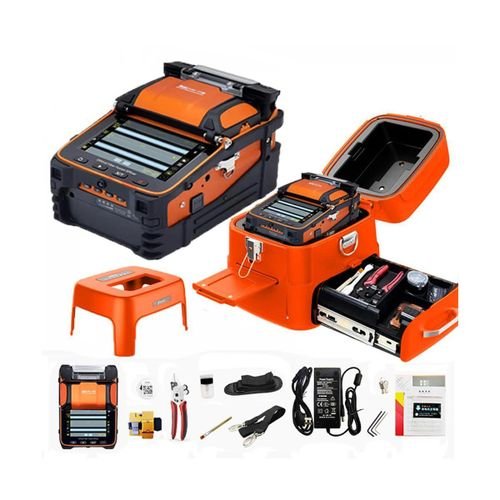
A common example is the Signal Fire AI-5 Optical Fiber Fusion Splicer.
Mid-Range Core Alignment Splicers
Mid-range machines offer a strong balance between cost and performance. They are often preferred by contractors who perform FTTH deployments regularly and require better speed, alignment accuracy, and battery life.
Advantages:
- Improved splice quality
- Better battery capacity
- Faster operation
- Professional performance
A good example is the Signal Fire AI-6A+.
Professional Core Alignment Fusion Splicers
Professional splicers are designed for contractors, ISPs, enterprise deployments, and organizations handling larger fiber networks. These machines emphasize speed, accuracy, battery capacity, and long-term reliability.
Benefits include:
- Core alignment technology
- Low splice loss
- Integrated testing functions
- Long battery life
- Faster workflow
A popular professional option is the Signal Fire AI-9 Fiber Fusion Splicer.
Telecom Backbone Fusion Splicers
Backbone splicers are built for large-scale network deployments, telecom operators, metro fiber networks, and long-distance fiber routes. These machines focus on precision, speed, reliability, and advanced features.
They are commonly used for:
- National fiber networks
- Metro fiber infrastructure
- ISP backbone deployment
- Large enterprise projects
- Telecom expansion projects
An example is the Signal Fire AI-30 Optical Fiber Fusion Splicer.
Should You Buy the Cheapest Fusion Splicer?
Many buyers initially focus on purchase price. While budget matters, the cheapest machine is not always the most economical option.
Low-cost machines may lead to:
- Higher splice loss
- More rework
- Lower productivity
- Reduced battery performance
- Limited support availability
In many cases, spending slightly more on a professional-grade machine reduces operating costs over the long term.
Total Cost of Ownership
When comparing fusion splicers, buyers should consider the total cost of ownership rather than the initial purchase price alone.
| Cost Component | Importance |
|---|---|
| Purchase Price | Initial investment |
| Replacement Electrodes | Routine maintenance |
| Battery Replacement | Long-term operation |
| Calibration and Service | Performance maintenance |
| Downtime Costs | Productivity impact |
| Project Quality | Customer satisfaction |
What Accessories Should Be Budgeted For?
Many buyers forget to include accessories in their budget.
Important accessories include:
- Fiber Cleaver
- Replacement Electrodes
- Power Adaptor
- Heat shrink sleeves
- Cleaning supplies
- Testing equipment
Budgeting for accessories improves long-term project planning.
How to Choose the Right Price Range
| Buyer Type | Recommended Category |
|---|---|
| New Technician | Entry-Level FTTH Splicer |
| Fiber Contractor | Mid-Range Core Alignment Splicer |
| ISP Deployment Team | Professional Core Alignment Splicer |
| Telecom Operator | Telecom Backbone Splicer |
Frequently Asked Questions
How much does a fusion splicer cost in Kenya?
Prices vary depending on the model, features, alignment technology, and accessories included. Entry-level units generally cost less than professional telecom-grade machines.
Are expensive fusion splicers worth it?
For contractors, ISPs, and telecom operators, higher-end models often provide better long-term value through improved performance and productivity.
Should I buy a core alignment fusion splicer?
Core alignment is generally recommended for professional installations where low splice loss and reliability are important.
Do I need additional accessories?
Yes. Fiber cleavers, electrodes, batteries, cleaning supplies, and testing tools are important parts of a complete fiber installation kit.
Conclusion
Fusion splicer pricing varies significantly depending on performance, technology, and intended application. Rather than focusing only on purchase cost, buyers should consider project requirements, productivity, maintenance costs, and long-term value.
In the next guide, we compare ownership options in Should You Buy or Rent a Fiber Fusion Splicer?.
