
Networking
Core Alignment vs Cladding Alignment Fusion Splicers Explained
Jun
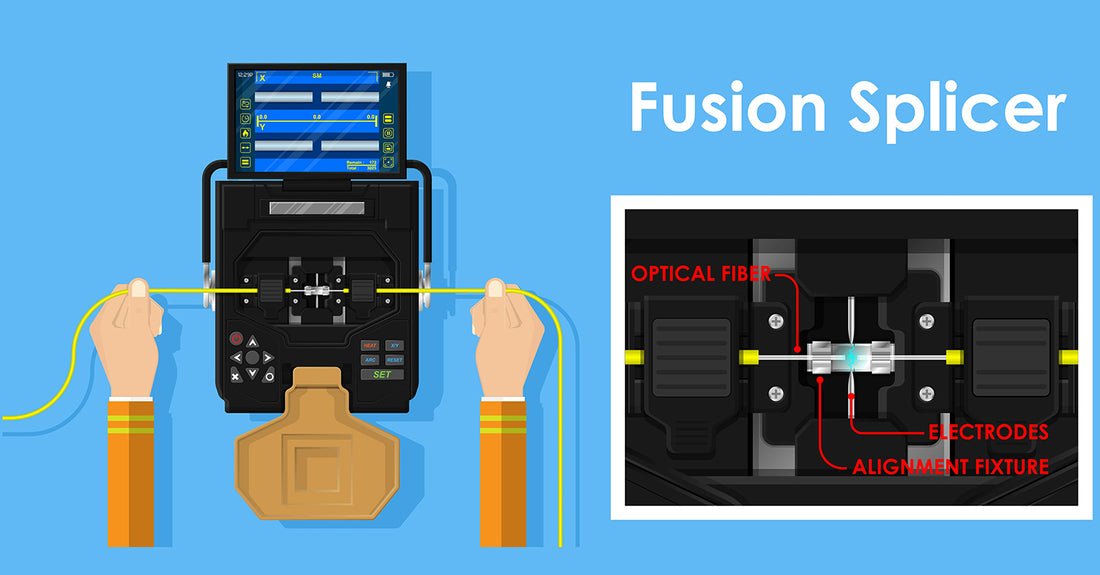
Choosing between a core alignment fusion splicer and a cladding alignment fusion splicer is one of the most important decisions when buying a fiber optic splicing machine. The alignment method affects splice loss, installation quality, project suitability, speed, and long-term reliability. For FTTH installers, ISP contractors, telecom engineers, CCTV fiber technicians, and network maintenance teams, understanding the difference helps prevent costly equipment mistakes.
In simple terms, core alignment fusion splicers align the actual fiber cores before splicing, while cladding alignment fusion splicers align the outer cladding of the fiber. Both technologies can work well depending on the project, but they are not equal in precision, cost, and application. This guide explains how each alignment method works, when to choose each one, and which type is best for FTTH, ISP, telecom, and backbone fiber projects.
If you are comparing available models, browse our full range of Fiber Optic Splicing Machines or continue from our previous guide on How to Choose a Fiber Fusion Splicer for FTTH Installations.
What Is Fiber Alignment in Fusion Splicing?
Fiber alignment is the process of positioning two optical fiber ends correctly before they are fused together. The goal is to join the fibers with the lowest possible splice loss so that light passes through the connection with minimal attenuation. If the fibers are not aligned correctly, the splice may still complete, but the link can suffer from poor signal quality, high loss, or unreliable performance.
In fiber optic networks, even a small alignment error can affect performance, especially in longer links, backbone routes, ISP networks, and high-speed data connections. That is why alignment technology is one of the most important features to check before buying a fusion splicer.
What Is Core Alignment?
A core alignment fusion splicer aligns the actual fiber cores before fusion. Since the fiber core is the part that carries the optical signal, aligning the cores directly helps achieve lower splice loss and better connection quality.
Core alignment machines typically use high-precision motors, cameras, and image processing technology to detect the fiber core position. The machine then adjusts the fiber ends until the cores are properly aligned before performing the fusion arc.
Core alignment is generally preferred for professional applications where low splice loss and consistency matter. These include telecom backbone projects, ISP networks, data center fiber links, metro fiber, enterprise networks, and high-volume FTTH deployments.
Advantages of Core Alignment Fusion Splicers
Lower Splice Loss
Core alignment splicers generally produce lower splice loss because they align the part of the fiber that actually transmits the signal. This makes them ideal for demanding fiber networks where link quality is critical.
Better for Professional Installations
For ISPs, telecom contractors, and network engineers, core alignment provides better long-term reliability. It is especially useful when working on longer fiber runs, backbone connections, and high-speed networks.
More Consistent Results
Core alignment machines handle small fiber geometry differences better than basic cladding alignment models. This improves consistency when working with different cable batches, fiber types, and field conditions.
Suitable for High-Value Projects
If a project requires strict performance standards, core alignment is usually the safer choice. Models such as the Signal Fire AI-9 Fiber Fusion Splicer, Signal Fire AI-10A Optical Fiber Fusion Splicer, Signal Fire AI-20 Optical Fiber Fusion Splicer, and Signal Fire AI-30 Optical Fiber Fusion Splicer are suitable for professional deployment needs.
What Is Cladding Alignment?
A cladding alignment fusion splicer aligns the outer cladding of the fiber rather than directly aligning the core. The cladding surrounds the fiber core and helps guide light through the fiber. In many standard applications, cladding alignment can produce acceptable results when the fibers are clean, properly cleaved, and of good quality.
Cladding alignment machines are usually more affordable than core alignment machines. They are commonly used for basic FTTH installations, small contractor jobs, access networks, maintenance work, and lower-volume installations.
Advantages of Cladding Alignment Fusion Splicers
Lower Purchase Cost
Cladding alignment fusion splicers are usually more affordable, making them attractive for new technicians, small installers, and teams with limited budgets.
Suitable for General FTTH Work
For short-distance FTTH installations and basic access networks, a reliable clad alignment or active clad alignment model can be sufficient when used properly.
Simple Operation
Many cladding alignment machines are compact, portable, and easy to operate. This makes them useful for field technicians who need a straightforward splicing solution.
Good for Portable Field Kits
Models such as the Komshine EX39 Handheld Fusion Splicer and JILONG KL-280E Fusion Splicer can be practical for field technicians who need portability and reliable general-purpose performance.
Core Alignment vs Cladding Alignment Comparison
| Feature | Core Alignment Fusion Splicer | Cladding Alignment Fusion Splicer |
|---|---|---|
| Alignment Method | Aligns the actual fiber cores | Aligns the outer cladding of the fiber |
| Splice Loss | Lower and more consistent | Acceptable but usually higher |
| Accuracy | Higher precision | Moderate precision |
| Best For | Telecom, ISP, backbone, enterprise and professional FTTH projects | Basic FTTH, access networks, maintenance and light field work |
| Cost | Higher investment | More affordable |
| Fiber Type Handling | Better with mixed or demanding fiber conditions | Works well with clean and properly prepared standard fibers |
| Recommended Users | ISPs, telecom contractors, backbone teams and advanced installers | New technicians, small contractors and general FTTH installers |
Which Alignment Type Is Best for FTTH Installations?
For basic FTTH installations, both alignment types can work depending on project requirements and budget. If you are installing short links to homes or small offices, a good cladding alignment or active clad alignment fusion splicer may be sufficient. However, if you handle high volumes of FTTH work, business customers, estates, or ISP connections, core alignment is usually the better investment.
Core alignment reduces the chances of high splice loss and repeated rework. This is important for contractors who want consistent results and fewer customer complaints. For FTTH teams planning to grow, choosing a core alignment splicer early can save money over time.
Which Alignment Type Is Best for ISP and Telecom Projects?
For ISP and telecom projects, core alignment is strongly recommended. These projects often involve longer fiber runs, higher performance expectations, more demanding customers, and stricter network quality requirements. A small increase in splice loss across multiple joints can affect overall link performance.
For this reason, ISP and telecom teams should prioritize core alignment models with fast splicing, strong battery life, rugged construction, and integrated testing functions. The Signal Fire AI-20 and Signal Fire AI-30 are better suited for demanding professional deployments and backbone fiber projects.
For more project-specific comparisons, continue to the next article: Best Fiber Fusion Splicers for ISP and Telecom Projects.
Common Misconceptions About Fusion Splicer Alignment
Cladding Alignment Is Not Always Bad
Cladding alignment is not automatically poor quality. A good cladding alignment machine can perform well for the right type of work. The main issue is using it for jobs that require core-level precision.
Core Alignment Is Not Always Necessary for Every Job
Not every installation requires the most advanced machine. A small contractor doing occasional FTTH jobs may not need a premium backbone-grade splicer. The right choice depends on project volume, link distance, expected loss levels, and budget.
Cleaving Quality Still Matters
Even the best core alignment machine will perform poorly if the fiber is badly cleaved. A precision fiber cleaver such as the FC-6S High Precision Fiber Cleaver is still essential for good results.
Other Factors Beyond Alignment
Alignment type is important, but it is not the only buying factor. You should also consider splicing speed, heating speed, battery capacity, display quality, software management, availability of replacement electrodes, and access to after-sales support.
For technicians working long hours in the field, battery performance is critical. Keeping a compatible Signal Fire Replacement Lithium Battery can reduce downtime. For routine maintenance, Signal Fire Replacement Electrodes help maintain stable arc performance.
Recommended Buying Approach
If your work is mostly basic FTTH and low-volume maintenance, you can start with a reliable active clad alignment or entry-level model. If you work on ISP networks, commercial customers, backbone routes, or high-volume FTTH deployment, choose a core alignment fusion splicer.
Buyers should also consider the brand ecosystem. Browse Signal Fire fusion splicers for a broad range of core alignment models, Jilong fiber splicing equipment for professional alignment tools, and Komshine fiber optic tools for portable testing and splicing solutions.
Frequently Asked Questions
Is core alignment better than cladding alignment?
Yes, core alignment is generally better for precision and low splice loss because it aligns the actual fiber cores. However, cladding alignment can still be suitable for basic FTTH and general access network installations.
Which fusion splicer should a beginner buy?
A beginner can start with a reliable FTTH-focused model, but should avoid very low-quality machines. If the technician plans to handle regular professional installations, a core alignment model is a better long-term investment.
Is clad alignment enough for FTTH?
For many short-distance FTTH installations, clad alignment can work when the fiber is clean and properly prepared. For high-volume FTTH, ISP, and commercial installations, core alignment is recommended.
Why does alignment affect splice loss?
Alignment affects how accurately the optical signal passes from one fiber core to another. Poor alignment increases signal loss and can reduce network performance.
Do core alignment splicers cost more?
Yes, core alignment splicers usually cost more because they use more advanced motors, cameras, and alignment processing. The higher cost is justified for professional and high-performance fiber projects.
Conclusion
The difference between core alignment and cladding alignment fusion splicers comes down to precision, performance, cost, and project suitability. Core alignment is best for professional FTTH, ISP, telecom, backbone, and enterprise fiber projects where low splice loss is important. Cladding alignment is more affordable and suitable for general FTTH and lighter maintenance work.
For a complete product comparison, explore our Fiber Optic Splicing Machines category. You can also compare leading brands including Signal Fire, Jilong, Komshine, and GrandLink.

Pingback: How to Choose a Fiber Fusion Splicer for FTTH Installations | Rapidtech Networks Limited
Pingback: How to Reduce Fiber Fusion Splicing Loss | Rapidtech Networks Limited
Pingback: Fiber Fusion Splicer Buyer's Guide 2026: How to Choose the Right Fusion Splicer for Your Projects | Rapidtech Networks Limited